Part 1
The guesthouse was never theirs to take.
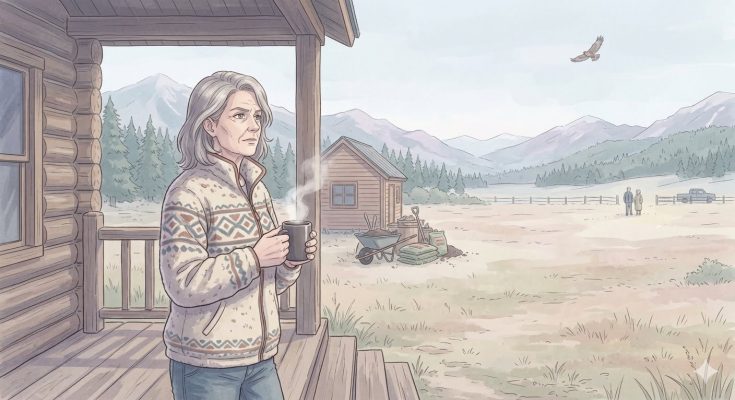
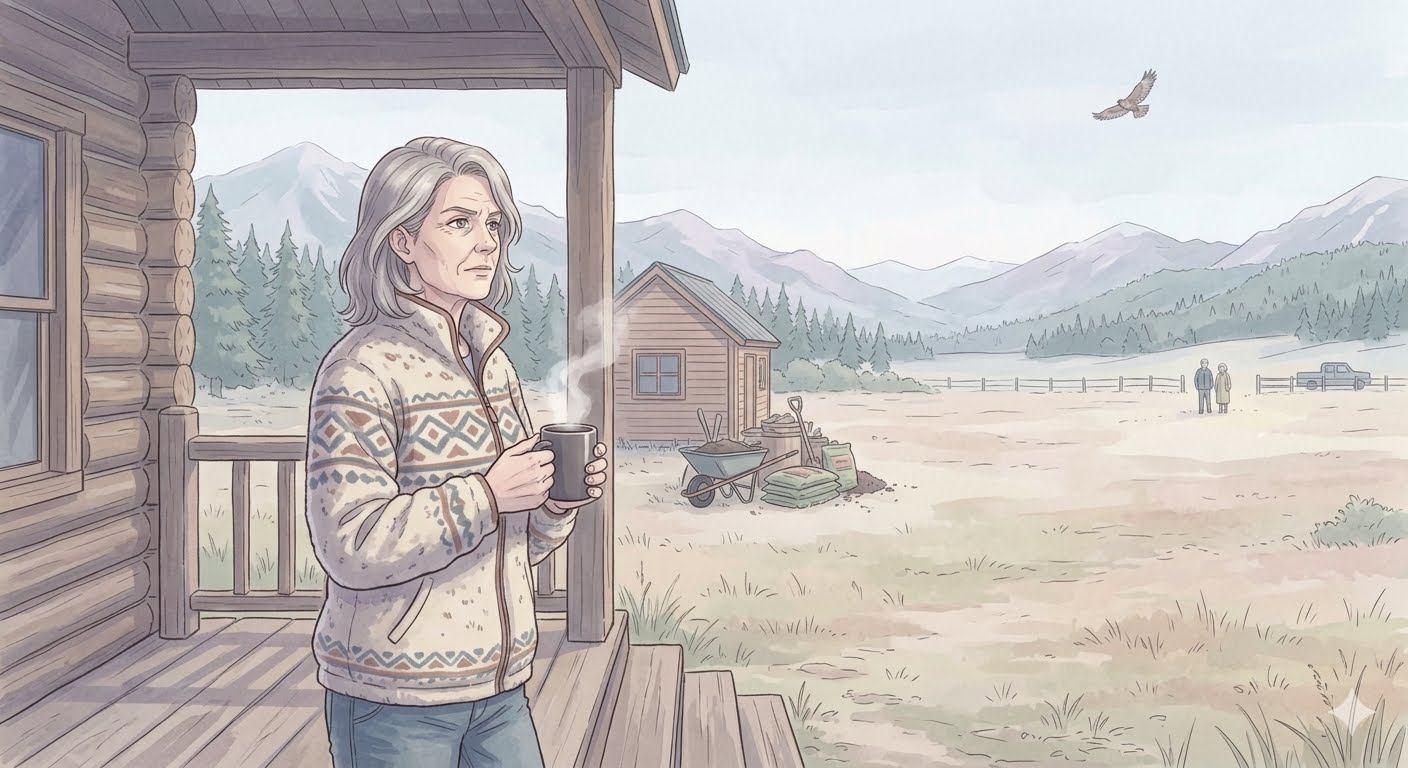
I was standing on the front porch of my cabin in Montana, holding a mug of black coffee between both hands, when my daughter-in-law informed me that her parents were moving onto my property.
She didn’t ask.
She announced it.
“My parents will arrive on the fifteenth,” Lauren said over the phone. “They’ll stay in the guesthouse. Rent in Seattle has gotten ridiculous, and they need somewhere stable.”
For a moment, I thought I’d misunderstood her.
The morning was cool enough that steam rose from my coffee. Beyond the porch railing, nine acres of grass and pine stretched toward the Bitterroot Mountains. A hawk circled over the lower pasture. Somewhere behind the workshop, water dripped steadily from a garden hose I’d forgotten to tighten.
This was what I had bought after thirty-seven years as a surgical nurse in Chicago.
Silence.
Space.
My own life.
Not a family relocation center.
“Lauren,” I said, “the guesthouse is full of gardening equipment.”
“We’ll clear it out.”
“It isn’t properly insulated for winter.”
“My dad can fix that.”
I stared at the small cedar-sided building about forty yards from the cabin.
“And who decided your parents could live there?”
Silence.
Not confusion.
Not embarrassment.
Annoyance.
“Margaret,” she finally said, “you’re making this harder than it needs to be.”
That sentence did something to me.
For thirty-seven years, I’d worked twelve-hour shifts under fluorescent lights while monitors beeped, surgeons shouted, families cried, and emergencies arrived without warning. I had spent decades being the calm person in rooms where everyone else was terrified.
I retired at sixty-two.
I sold my townhouse outside Chicago and bought nine acres in the Bitterroot Valley—a modest log cabin, a detached workshop, a half-finished guesthouse, pine trees, fencing, and enough open land that I could sit outside without hearing a neighbor’s television.
I hadn’t bought luxury.
I’d bought peace.
And now Lauren was explaining how much of it her parents were entitled to.
“Did you discuss this with Daniel?” I asked.
“Of course.”
“Did he agree?”
“He understands the situation.”
That wasn’t an answer.
Two days later, my son called.
“Mom, I know Lauren surprised you.”
“She didn’t surprise me, Daniel. She informed me.”
He sighed.
“Her parents are struggling. It would only be temporary.”
“How temporary?”
“Maybe six months.”
I nearly laughed.
In Montana, six months included winter.
“Did you tell Lauren they could live here before she called me?”
The pause lasted barely two seconds.
It was enough.
“We discussed possibilities.”
“I see.”
“Mom, don’t be angry.”
“I’m not angry.”
His voice relaxed immediately.
“Good. We’ll come Saturday and help clear the guesthouse.”
I looked toward the little building.
My wheelbarrow leaned against one wall. Seed trays were stacked by the window. My late husband’s old tool chest sat inside beside bags of potting soil.
“Saturday?”
“Yeah. We’ll make a day of it.”
“I’ll see you then.”
I hung up.
Then I finished my coffee.
I didn’t scream.
I didn’t call Lauren back.
I didn’t send Daniel a five-paragraph message about respect.
Instead, I put on my boots, took my truck into town, and walked directly into the hardware store.
I bought three heavy-duty padlocks.
Two steel chains.
One reinforced deadbolt.
And a package of new security screws.
The clerk smiled as he rang everything up.
“Building a fortress?”
“Something like that.”
When I got home, I didn’t remove a single gardening tool from the guesthouse.
I replaced the old lock.
Then I wrapped a steel chain through the double doors and snapped a new padlock into place.
I did the same thing to my workshop.
The keys went onto my personal key ring.
Standing there in the afternoon sunlight, listening to the metal click shut, I understood something I’d spent most of my life avoiding.
People who ignore boundaries usually rely on one assumption.
Eventually, you’ll become too uncomfortable to enforce them.
They expect arguments.
They expect guilt.
Most of all, they expect surrender.
I wasn’t planning to give them any of the three.
Friday morning, a delivery truck appeared at the end of my driveway.
A man in a blue uniform climbed out with a clipboard.
“Delivery for Margaret Lawson?”
“That’s me.”
He checked the invoice.
“Queen mattress and box spring.”
I frowned.
“I didn’t order a mattress.”
He glanced at his paperwork.
“Paid for by Lauren Lawson.”
Then he pointed toward my guesthouse.
“It’s going in there.”
I looked at him.
Then at the locked building.
“No, it isn’t.”
His eyebrows rose.
“The address is correct.”
“The address is. The customer doesn’t live here.”
“So you’re refusing delivery?”
“Absolutely.”
He gave me a look that said he’d seen stranger family disputes.
“Works for me, ma’am.”
Thirty minutes after the truck disappeared, my phone rang.
Lauren.
I let it ring twice before answering.
“Why did the furniture company just tell me you rejected my delivery?”
“Because I rejected your delivery.”
“That mattress is for my parents.”
“Then have it delivered to wherever they’re going to live.”
She inhaled sharply.
“Margaret, they need somewhere to sleep.”
“That isn’t my responsibility.”
Her voice rose.
“You are being completely unreasonable.”
I looked out at the mountains.
“Lauren, don’t send anything else to my property without permission.”
She started shouting.
I ended the call.
The next morning, Daniel and Lauren pulled into my driveway shortly before noon.
Lauren climbed out wearing oversized designer sunglasses and carrying a clipboard.
She didn’t say hello.
“Let’s get started,” she announced. “My father has tools, so we’ll need some workshop space too.”
Then she marched toward the guesthouse.
Daniel remained beside the SUV.
“Mom,” he muttered, “just let her handle it.”
I looked at my son.
“Handle what?”
He had no answer.
A second later, Lauren grabbed the guesthouse handle.
She pulled.
Nothing happened.
She pulled again.
Then she looked down.
At the chain.
At the padlock.
Her expression changed.
“Where’s the key?”
“In my pocket.”
She held out her hand.
“Give it to me.”
“No.”
Her hand remained suspended between us.
“What?”
“The guesthouse isn’t available.”
“My parents are moving in next week.”
“You told me that.”
“Exactly.”
“No. You informed me. You never asked.”
Lauren’s face turned bright red.
Then she spun toward my son.
“Daniel. Tell your mother to open the door.”
Daniel stared at the ground.
I waited.
Finally he said, “Mom, come on.”
I shook my head.
“No.”
One word.
That was all.
And for the first time since this began, Lauren looked genuinely uncertain.
Because she had finally realized I wasn’t negotiating.
### Part 2
Lauren stared at me as though someone had replaced her agreeable mother-in-law with a stranger overnight.
“You’re actually refusing to open it?”
“Yes.”
She turned toward Daniel.
“Are you going to stand there and let her do this?”
Daniel rubbed the back of his neck.
“Lauren, maybe we should talk.”
“Talk about what? My parents already gave up their lease.”
That caught my attention.
I looked at Daniel.
“They gave up their apartment before they had permission to live here?”
His jaw tightened.
Lauren stepped forward.
“They had to act quickly.”
“That’s unfortunate.”
“They sold furniture because the guesthouse is smaller.”
“I didn’t tell them to.”
“My mother has been packing for two weeks.”
“I didn’t tell her to.”
Every sentence irritated Lauren more because there was nothing for her to argue with.
She had prepared for anger.
She had prepared for guilt.
She hadn’t prepared for facts.
“They’re family,” she snapped.
“They’re your family.”
“They’re Daniel’s family too.”
Daniel flinched.
I looked at him.
“If you want to house your in-laws, you’re free to do that.”
Lauren laughed bitterly.
“Where? Our apartment barely has two bedrooms.”
“Then perhaps promising them someone else’s home wasn’t a good idea.”
Daniel finally looked at me.
“Mom, we’re just asking for six months.”
“No, Daniel. You’re asking now. Lauren decided weeks ago.”
He lowered his eyes again.
That hurt more than Lauren’s attitude.
My son wasn’t confused.
He knew she was wrong.
He simply hoped I would absorb the inconvenience so he wouldn’t have to confront his wife.
Lauren began listing sacrifices her parents had supposedly made. Furniture sold. Deposits lost. Storage fees. A neighborhood they loved leaving behind.
Not once did she mention the person whose property they intended to occupy.
Eventually she stormed toward the SUV.
Daniel lingered near the porch.
“Mom, please don’t turn this into a family war.”
“I didn’t.”
He frowned.
“Then what are you doing?”
“Protecting my home.”
He stared at me for a moment, then walked away.
Lauren slammed the passenger door so hard the SUV rocked.
After they disappeared down the driveway, dust floated above the gravel for several minutes.
I sat on the porch until it settled.
That evening, I opened my laptop.
For years, I had helped Daniel financially.
Not because he demanded it at first.
Because I could.
When he was in college, I kept him on my cellular plan. When he bought his truck, I co-signed because his credit history was thin. Even after he married Lauren, I continued paying the insurance every six months.
Birthday trips.
Emergency repairs.
A new refrigerator after theirs failed.
A portion of their wedding expenses.
I never kept score.
He was my son.
But as I studied the accounts that night, I noticed something unpleasant.
My generosity had become infrastructure.
They no longer viewed it as help.
They had built their lives around the assumption that I would continue providing.
And Lauren had simply extended the logic.
If Margaret pays insurance, why shouldn’t Margaret provide housing?
If Margaret owns nine acres, why shouldn’t we use some?
If she has an empty building, why shouldn’t my parents occupy it?
I closed the laptop.
Then opened it again.
First, I logged into the cellular account.
Daniel’s number sat beneath mine.
I clicked “Transfer Billing Responsibility.”
Three minutes later, it was no longer my expense.
Next came the insurance.
I removed his truck effective at the end of the current coverage period and forwarded the required paperwork to him.
Then I went through every recurring payment connected to my adult son’s household.
There weren’t many.
But there were enough.
I didn’t send a warning.
Didn’t make a speech.
I simply stopped paying for things I had never been obligated to provide.
That night, I slept better than I had in weeks.
Two days later, Daniel called.
“Mom, my phone says I need to establish a new payment method.”
“I know.”
“You transferred the line.”
“Yes.”
“And I got an insurance notice.”
“Correct.”
He went silent.
“Why?”
“Because you’re thirty-five.”
He exhaled sharply.
“Lauren thinks you’re punishing us.”
“I’m simplifying my finances.”
“Mom.”
“Daniel.”
Another silence.
Then he lowered his voice.
“She’s furious.”
“I can’t solve that for you.”
“We’re already dealing with her parents.”
“Then you and Lauren need to decide how you’re going to handle your responsibilities.”
He was quiet long enough that I almost asked whether he was still there.
Then he said something that chilled me.
“She’s going to do something.”
I sat straighter.
“What does that mean?”
Before he could answer, I heard Lauren shouting in the background.
A moment later, she took the phone.
“You think you’re clever, Margaret?”
“I’m not trying to be clever.”
“You cut Daniel off because you think it’ll scare us.”
“No.”
“Fine. Keep your precious guesthouse.”
Her voice changed.
It became colder.
“My father bought an RV.”
I said nothing.
“We’re bringing it Friday.”
“Don’t.”
She laughed.
“You can’t stop us from parking a vehicle on empty land.”
“I can stop you from bringing it onto my property.”
“We’ll see.”
The call ended.
For several minutes, I stood at the kitchen window staring toward the lower pasture.
Lauren was right about one thing.
There was plenty of empty land.
But there was only one narrow dirt road leading into that pasture.
A thirty-foot trailer couldn’t reach the grass without crossing it.
I put on my coat.
Then I called a local contractor.
“Grant Ellis?”
“Speaking.”
“This is Margaret Lawson. I need some excavation work.”
“What kind?”
I looked toward the lower pasture.
“I’ve decided it’s time to install irrigation.”