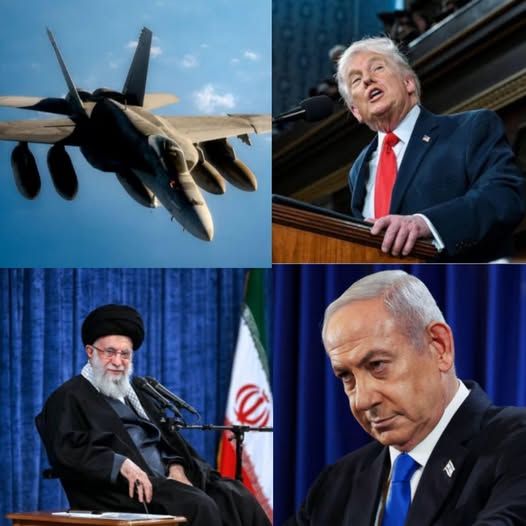
The headline sounds sudden and shocking:
“Just in: U.S. and Israel launch massive coordinated strike on Iran…”
It feels like something that just happened minutes ago. A sudden escalation. A turning point.
But here’s the key truth:
 This isn’t a brand-new event—it’s part of an ongoing war that began weeks ago.
Still, what happened is very real, very serious, and far more complex than the viral “see more in comment” posts suggest.
 The Start of the Strikes
On February 28, 2026, the United States and Israel launched a large-scale, coordinated military campaign against Iran.
This was not a single attack—it was the beginning of a broader offensive targeting:
- Iranian military infrastructure
- Missile and drone systems
- Nuclear-related facilities
- Key leadership and intelligence locations
Explosions were reported across multiple cities, including the capital, Tehran. Smoke rose over government buildings, and panic spread quickly among civilians.
According to early reports, some of the first strikes even hit areas near the offices of Iran’s Supreme Leader.
 What Was the Goal?
The objective of the operation was clear—though controversial.
U.S. and Israeli leadership aimed to:
- Disrupt Iran’s military capabilities
- Limit its missile and nuclear programs
- Potentially weaken or destabilize the ruling government
In fact, public statements at the time suggested something even more ambitious:
Encouraging internal change within Iran’s leadership structure
This made the operation far more than a simple retaliation—it became a strategic attempt to reshape the balance of power in the region.
 The Scale of the Attack
This was not a limited strike.
Analysts described it as one of the most intense coordinated air campaigns in recent history, with a high number of targets hit in a short period.
The assault included:
- Precision airstrikes
- Cruise missiles
- Coordinated intelligence targeting
Multiple regions across Iran were affected, not just a single military base or facility.
 Civilian Impact and Controversy
As with many large-scale military operations, the consequences extended beyond military targets.
Reports emerged of:
- Civilian casualties
- Damage to infrastructure
- Confusion and fear across major cities
One particularly tragic report claimed dozens were killed in a strike on a school in southern Iran, though details remain difficult to independently verify.
This has fueled global concern and criticism, especially from humanitarian groups.
 Iran’s Immediate Response
Iran did not wait long to respond.
Within hours:
- Waves of ballistic missiles and drones were launched
- Targets included Israel and U.S. military bases across the region
- Airspace across multiple countries was shut down
This marked the transition from a strike… to a full-scale regional conflict.
Since then:
- Missile attacks have hit Israeli cities
- U.S. positions in Gulf countries have been targeted
- The risk of wider war has grown significantly
 Where Things Stand Now
Here’s where the situation becomes even more complicated.
Recent developments indicate:
- The war is still ongoing
- Strikes and counterstrikes continue
- At the same time, diplomatic talks may be starting

Axios

The Washington Post
Reuters
Some reports suggest:
- The U.S. has delayed further major strikes to allow negotiations
- There are attempts to prevent the conflict from escalating further
- Regional countries are trying to mediate
But tensions remain extremely high.
 Why the Headline Is Misleading
The viral version of this story makes it sound like something that just happened “minutes ago.”
That’s not accurate.
The initial massive coordinated strike already happened weeks ago What we’re seeing now is the continuation of that conflict
Social media posts use phrases like:
- “Just in”
- “Massive strike”
- “See more in comment”
to create urgency—even when the information is recycled or exaggerated
 Reality vs. Viral Narrative
Let’s break it down clearly:
What’s true:
- The U.S. and Israel did launch a major coordinated attack on Iran
- It triggered an ongoing and dangerous regional conflict
- Iran has retaliated with missile and drone strikes
What’s misleading:
- That this is a brand-new, sudden event
- That something dramatic just happened “minutes ago”
- That key details are hidden in a comment or link
 The Bigger Picture
This isn’t just about one strike.
It’s about a rapidly evolving conflict that could reshape global politics.
Key risks include:
- Disruption of global oil supply
- Expansion into a wider regional war
- Involvement of additional global powers
Even small escalations now carry enormous consequences.
 Final Thought
The headline promises drama:
A sudden strike.
A shocking escalation.
A hidden story waiting in the comments.
But the truth is more serious—and more important.
This is not a moment.
It’s a conflict already in motion, with real consequences unfolding every day.
And unlike viral posts, the real story doesn’t end after you click “see more.”